A lot of people assume that dry cleaning is the "premium" option and wash and fold is the basic one. The truth is more nuanced than that. These are two fundamentally different cleaning processes, and choosing the right one depends entirely on the garment, the fabric, and the type of soil or stain you're dealing with. Most of your wardrobe doesn't need dry cleaning at all, and sending everyday clothes to the dry cleaner is often a waste of money.
Quick Answer
Wash and fold uses water and detergent for everyday clothes and costs less, while dry cleaning uses chemical solvents for delicate or structured garments.
Here's an honest breakdown of both processes so you can make informed decisions about your laundry.
- Wash and Fold
- A laundry service where garments are machine-washed in water with detergent, tumble-dried, and neatly folded. Suitable for everyday clothing, bedding, and towels.
- Dry Cleaning
- A cleaning process that uses chemical solvents (typically perchloroethylene) instead of water to remove stains from delicate or structured fabrics such as suits, silk, and formal wear.
What Is Wash and Fold?
Wash and fold is exactly what it sounds like: your clothes are washed in water with detergent, dried, and neatly folded. It's the same process you do at home, but done with commercial-grade equipment that cleans more effectively and handles larger volumes.
The water-based cleaning process is excellent at removing water-soluble stains like sweat, food, dirt, and most everyday grime. Modern detergents and commercial machines with higher water temperatures and stronger agitation cycles clean more thoroughly than a domestic washing machine. Items are sorted by colour, fabric type, and care requirements, then washed on the appropriate cycle.
At Fresh Folds, our wash and fold service includes stain pre-treatment, proper sorting, commercial washing and drying, and everything comes back neatly folded and ready to put away. It's the simplest way to outsource your regular laundry.
What Is Dry Cleaning?
Despite the name, dry cleaning isn't actually dry. Garments are submerged in a liquid solvent instead of water. The most common solvent is perchloroethylene (often called "perc"), though some modern cleaners use hydrocarbon solvents or liquid silicone. The key difference is that no water touches the fabric at any point during the process.
This matters because some fabrics react badly to water. Silk can lose its sheen and develop water spots. Wool can shrink and felt. Structured garments with interfacing, shoulder pads, and multiple layers can lose their shape if the adhesives and construction materials are exposed to water. Dry cleaning solvents clean the fabric without triggering these reactions.
Dry cleaning is also better at dissolving oil-based stains because the solvents are chemically similar to oils and grease. A grease stain on a silk blouse, for example, responds better to solvent cleaning than water-based washing.
When to Choose Dry Cleaning
There are certain garments and fabrics where dry cleaning is the correct choice. Not the fancy choice or the cautious choice, but the technically correct one.
Silk
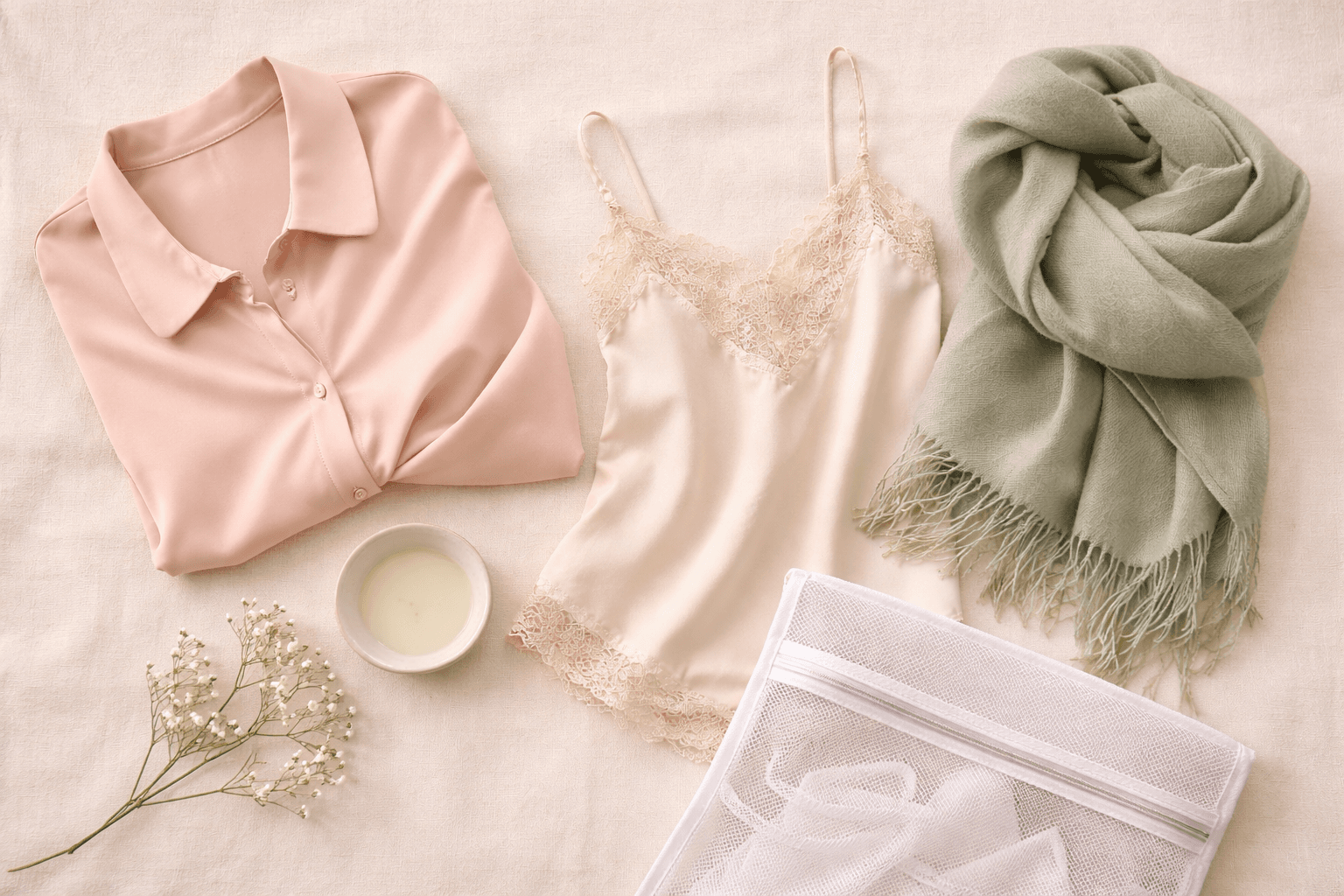
Most silk garments should be dry cleaned. Water can cause colour bleeding, water marks, and a loss of the fabric's characteristic lustre. Some silk items can be gently hand washed in cold water, but if you're not confident, dry cleaning is the safer path.
Structured Garments
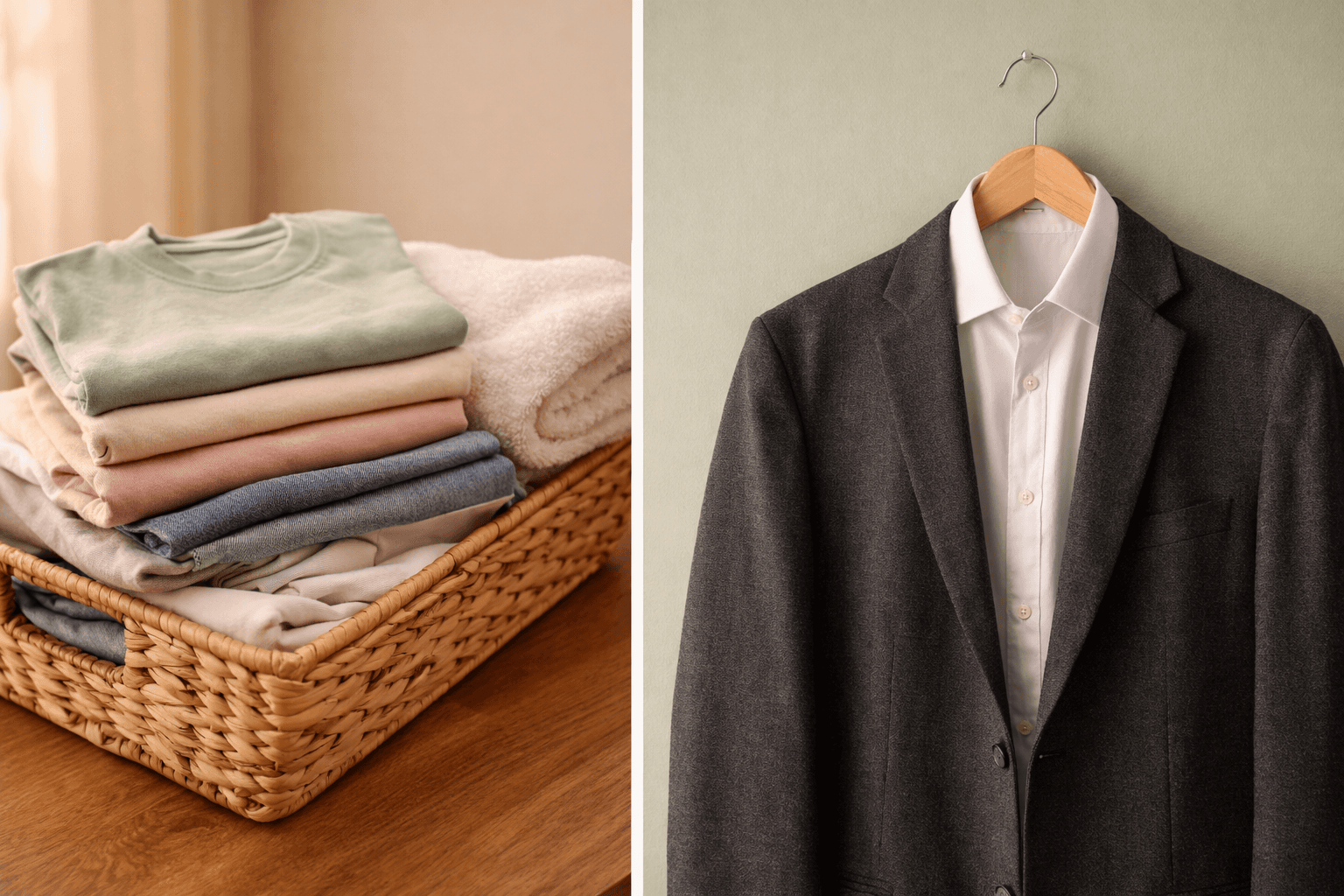
Suit jackets, blazers, and tailored coats contain layers of interfacing, canvas, and sometimes horsehair that hold their shape. Water can dissolve the adhesives between these layers, causing bubbling, warping, and permanent shape loss. Dry cleaning maintains the garment's structure.
Leather and Suede
Water damages leather and suede by stripping natural oils and causing stiffness, cracking, or colour changes. Specialist leather cleaning is a category of its own, but it falls under the dry cleaning umbrella.
Heavily Beaded, Sequined, or Embellished Items
Formal wear with glued-on embellishments can lose decorations in a water wash. The agitation and water exposure loosen adhesives. Dry cleaning is gentler on these items.
Vintage or Antique Textiles
Older fabrics can be fragile, and dyes used decades ago may not be water-safe. If you've inherited a garment or bought something vintage, professional assessment before any cleaning is a good idea.
When to Choose Wash and Fold
Here's the part that saves most people money: the vast majority of your wardrobe is perfectly suited to water-based washing. If the care label says "machine wash" or even just shows a water basin symbol, wash and fold is the right call.
Everyday Clothing
T-shirts, casual shirts, jeans, shorts, socks, underwear. All of these are designed to be washed in water. Sending a cotton t-shirt to the dry cleaner doesn't make it cleaner; it just costs more. Water and detergent are actually better at removing sweat and body oils than dry cleaning solvents.
Bedding and Towels
Sheets, pillowcases, duvet covers, bath towels, and hand towels all need hot water to kill dust mites and bacteria effectively. Dry cleaning bedding is unnecessary and less hygienic than a proper hot water wash. Our wash and fold handles bedding as part of your regular load.
Cotton, Linen, and Polyester Blends
These are the workhorses of most wardrobes. Cotton and poly-cotton blends make up the majority of casual and business-casual clothing, and they're all designed for water washing. Linen wrinkles easily but washes beautifully. If you want your linen and cotton shirts looking crisp, our wash and iron service is a better fit than dry cleaning and costs less.
Kids' Clothing
Children's clothes face mud, food, grass, paint, and everything else. Water-based washing with stain pre-treatment handles all of these effectively. There is no reason to dry clean children's clothing.
Activewear and Sportswear
Synthetic activewear needs water washing to remove sweat and bacteria. Dry cleaning solvents don't effectively remove water-soluble perspiration, which is the main thing you need to clean out of gym gear.
Cost Comparison
This is where the difference becomes very clear. Dry cleaning is significantly more expensive than wash and fold, and for good reason. The equipment costs more, the solvents are expensive, and the process involves more manual handling and skill.
| Feature | Wash & Fold | Dry Cleaning |
|---|---|---|
| Cleaning Method | Water + detergent | Chemical solvent (perc) |
| Best For | Everyday clothes, bedding, towels | Suits, silk, formal wear |
| Cost (per kg) | $5.50 | $15–$30+ |
| Turnaround | 24–48 hours | 3–5 days |
| Eco Impact | Low (biodegradable detergent) | Higher (chemical solvents) |
| Pickup & Delivery | Yes (Fresh Folds) | Varies by provider |
A single shirt dry cleaned typically costs $8 to $15. The same shirt washed, dried, and folded through a wash and fold service costs a fraction of that, often around $2 to $4 as part of a kilogram-priced load. For a household doing a few loads per week, the difference adds up to hundreds of dollars per year.
The smart approach is to reserve dry cleaning for garments that genuinely require it and use wash and fold for everything else. Your silk blouse goes to the dry cleaner. Your cotton work shirts, bed sheets, towels, and everyday clothes go through wash and fold. This gives you professional cleaning across your entire wardrobe without overspending.
Environmental Impact
This is an area where wash and fold has a clear advantage. Traditional dry cleaning uses perchloroethylene, which is classified as a hazardous air pollutant and a potential carcinogen. While modern dry cleaning machines are much better at containing and recycling perc than older equipment, the chemical still has an environmental footprint.
Water-based cleaning (what the industry calls "wet cleaning") uses biodegradable detergents and water. The environmental impact is significantly lower. Professional wet cleaning with modern equipment can actually handle many garments that were traditionally dry cleaned, using controlled water temperature, humidity, agitation, and specialised detergents to safely clean delicate fabrics.
Some newer dry cleaning operations use hydrocarbon solvents or liquid silicone (marketed as "GreenEarth"), which are less toxic than perc. But even these alternatives have a larger environmental footprint than water-based cleaning. If sustainability matters to you, choosing wash and fold where possible is the greener option.
Key Differences at a Glance
This is something that catches a lot of people out. The "dry clean only" label on clothing is often a manufacturer's caution rather than a strict requirement. Clothing manufacturers are legally required to provide at least one safe cleaning method on the care label. Many choose to list dry cleaning as the safest option to minimise their liability, even when the garment can be safely washed in water with proper care.
Items that often say "dry clean only" but can usually be wet cleaned safely include:
- Unstructured wool garments (knit sweaters, scarves, beanies)
- Many polyester and poly-blend dresses and blouses
- Rayon and viscose (with careful cold water hand washing)
- Cashmere (gentle hand wash in cool water with wool detergent)
- Some silk items (particularly silk/cotton blends)
Items where "dry clean only" should be taken seriously:
- Anything with structured interfacing (suit jackets, blazers)
- Garments with glued embellishments
- Leather, suede, and fur
- Heavily pleated items where the pleating is set with heat
- Multi-fabric garments where different components have different care needs
If you're unsure about a particular garment, our delicates and special care team can assess it and recommend the right cleaning method. We regularly wet clean garments labelled "dry clean only" with excellent results, saving our customers money while keeping their clothes in perfect condition. For detailed instructions on washing different delicate fabrics at home, see our guide to caring for delicate fabrics.
Making the Right Choice
The decision is straightforward once you understand the basics. Ask yourself two questions:
- Is the fabric water-sensitive? If yes (pure silk, structured wool, leather), dry clean it. If no (cotton, polyester, linen, blends), wash and fold is the better and cheaper option.
- Is the garment structured? Suits, blazers, and tailored coats with internal construction should be dry cleaned to preserve their shape. Everything else can be washed normally.
For most households, that means 90% or more of your laundry goes through wash and fold, and a handful of special items go to the dry cleaner a few times per year. That's the approach that gives you clean clothes, long garment life, and the lowest cost.
The Fresh Folds Approach
We see customers from Jimboomba and across the Logan region who used to dry clean far more than they needed to, simply because they weren't sure what was safe to wash normally. Once we assess their wardrobe and explain the options, most people find they can shift the bulk of their laundry to our wash and fold service and only dry clean the few items that truly require it.
If you've got a wardrobe full of garments you're not sure how to clean, or if you're tired of paying dry cleaning prices for clothes that don't need it, get in touch for a quote. We'll sort out what needs what, and make sure everything gets the right treatment at the right price.
People Also Ask
Reference Stack