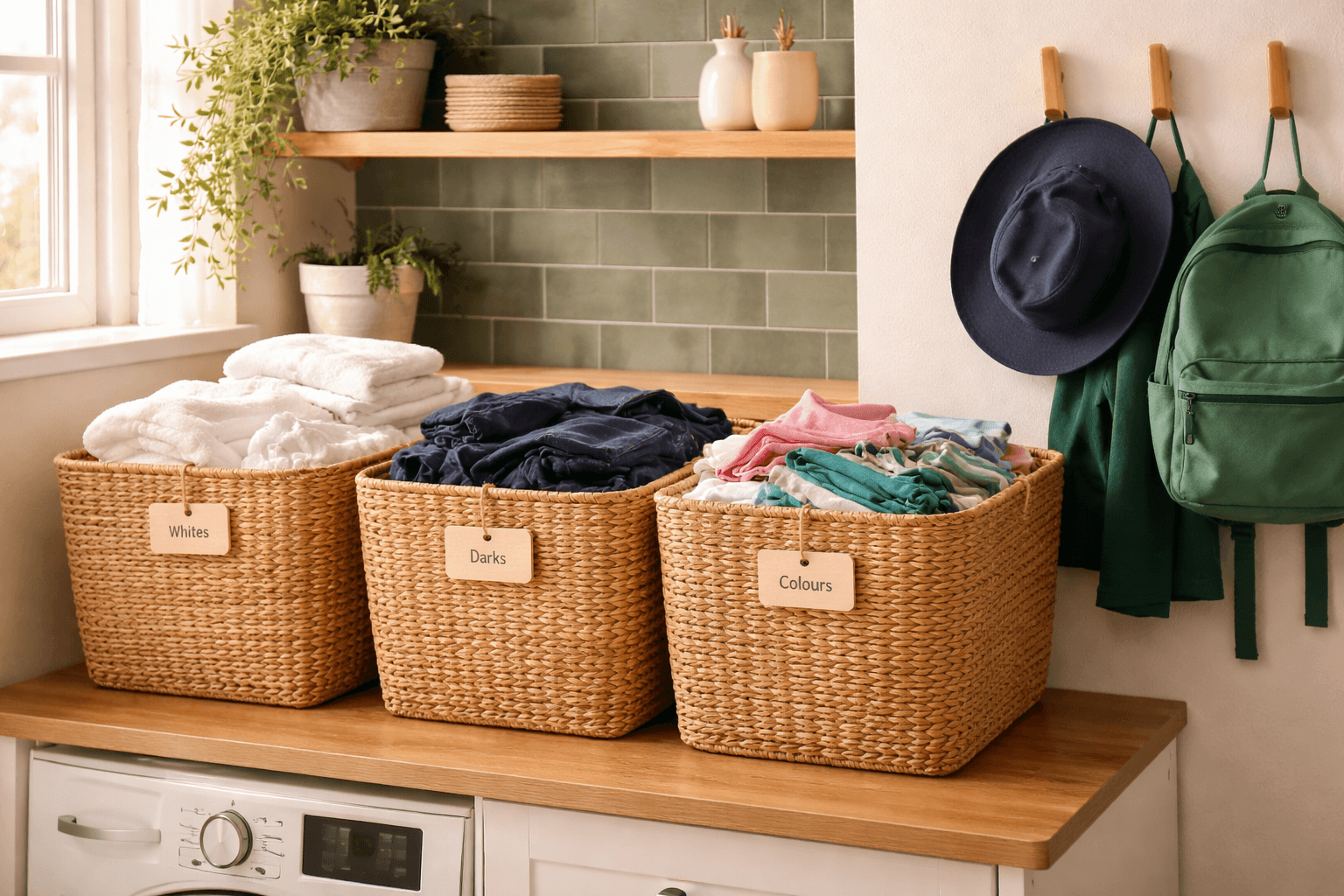
Running a household in South East Queensland means juggling school drop-offs, after-school activities, work commitments, weekend sport, and somehow keeping everyone in clean clothes through it all. Laundry is one of those chores that never actually finishes. The moment you empty the basket, it starts filling up again.
Quick Answer
The most effective laundry hack for busy families is to sort as you go using separate hampers for lights, darks, and delicates. Combined with a consistent schedule, one load per day or a weekly pickup service, you can cut laundry time by hours each week.
After years of helping local families manage their laundry, we have picked up a fair few tricks that genuinely make a difference. These are practical, tested tips that work in real life, not Pinterest-perfect advice that falls apart on a Tuesday night when everyone is tired.
Set Up a Sorting System That Actually Gets Used
The single biggest time waster in home laundry is sorting. Standing in the laundry room picking through a mountain of mixed clothes, separating darks from lights, pulling out delicates, and fishing school socks out of fitted sheets is tedious and slow. The fix is to sort as you go, not all at once on wash day.
The colour-coded basket method
Set up three baskets or bags in your laundry area (or in the hallway, wherever dirty clothes naturally land). Label or colour-code them:
- Dark basket for blacks, navys, dark greys, and jeans
- Light basket for whites, creams, pastels, and light greys
- Separate basket for towels and sheets (these need a different wash cycle and should not be mixed with regular clothes)
Teach everyone in the house to put their dirty clothes in the right basket. It takes about two seconds at the point of undressing, but it saves 10 to 15 minutes on wash day because your loads are already pre-sorted. Kids as young as four or five can learn to sort by colour. Make it simple and consistent, and it becomes automatic within a couple of weeks.
If you have family members who play sport or do outdoor work, consider adding a fourth basket for heavily soiled items. Grass-stained footy shorts and muddy work pants need a more aggressive wash cycle and can transfer dirt to your regular clothes if mixed in.
Create a Laundry Schedule and Stick to It
Trying to do all your laundry on the weekend is a recipe for frustration. Six or seven loads on a Saturday eats up your entire day between washing, drying, and folding. A better approach is to spread the load across the week with a simple schedule.
A sample weekly laundry schedule
- Monday: Darks (work clothes and school uniforms from the previous week)
- Wednesday: Lights and whites
- Friday: Towels and sheets
- As needed: Sport gear after games, heavily soiled items
This way you are only dealing with one or two loads on any given day, which takes about 30 to 40 minutes of active time. It also means you are not competing for clothesline space or dryer time. The key is picking days that work with your routine and treating them like any other appointment. Put the wash on before work or first thing in the morning, hang it out or transfer to the dryer when you get a break, and fold in the evening.
For larger families running more than seven loads a week, you might need to bump up to four wash days. The principle stays the same: spread it out so no single day becomes a laundry marathon.
Teach Kids to Help (Age-Appropriate Tasks)
Getting the kids involved is not just about lightening your load (though that is a genuine benefit). Learning to manage laundry is a basic life skill that plenty of adults never properly picked up. Starting young means your kids will actually know how to do their own laundry when they move out.
What kids can do at each age
- Ages 3 to 5: Sort clothes by colour into the baskets. Match clean socks into pairs. Put their own folded clothes in drawers.
- Ages 6 to 8: Help hang clothes on low sections of the clothesline or a drying rack. Fold simple items like towels, underwear, and t-shirts. Bring the dry laundry inside.
- Ages 9 to 11: Load and unload the washing machine. Measure detergent. Fold more complex items. Iron flat items like pillowcases with supervision.
- Ages 12 and up: Run a full load independently from start to finish. Iron their own school shirts. Sort and put away their own clean laundry without being asked (in theory, anyway).
The biggest tip here is to keep expectations reasonable. A seven-year-old's folding will not look like yours, and that is fine. Praise the effort, gently show them how to improve over time, and resist the urge to refold everything after they leave the room. They will get better with practice.
Pre-Treat Stains Immediately
This is the single most effective thing you can do to save clothes from permanent stains. The sooner you treat a stain, the easier it comes out. Once a stain sets and goes through the dryer, your chances of removing it drop dramatically.
Quick stain treatment guide
- Food and drink spills: Rinse with cold water immediately, then apply a small amount of liquid laundry detergent directly to the stain. Rub gently and leave for 10 minutes before washing.
- Grass stains: Rub white vinegar into the stain, let it sit for 30 minutes, then wash in the warmest water the fabric allows. This is a weekly occurrence for anyone with kids in weekend sport.
- Blood: Always use cold water. Hot water sets blood stains permanently. Soak in cold water with a tablespoon of salt for 30 minutes, then wash normally.
- Mud: Let it dry completely first. Brush off the dried mud, then pre-treat with detergent and wash. Trying to wash wet mud just spreads it through the fabric.
- Sunscreen: A Queensland classic. Apply dishwashing liquid to the stain, rub gently, soak in warm water for 30 minutes, then wash. Zinc-based sunscreens are particularly stubborn and may need a second treatment.
Keep a small bottle of liquid detergent or a stain stick near your laundry baskets so treatment happens right away, not three days later when you finally get around to washing.
Use Mesh Bags for Small Items and Delicates
Mesh laundry bags are cheap, last for years, and solve multiple problems at once. A pack of five costs around $10 from most supermarkets or discount stores, and they are worth every cent.
What to put in mesh bags
- Socks: Give each family member their own mesh bag. Dirty socks go in the bag, the bag goes in the wash, and matching pairs come out together. No more single socks disappearing into the void.
- Bras and underwire garments: The mesh bag prevents hooks and wires from catching on other clothes and stops bras from getting twisted and misshapen in the drum.
- Baby clothes: Tiny socks and singlets have a habit of getting tangled inside larger items. A mesh bag keeps them contained and easy to find.
- Anything with ties, straps, or strings: Hoodies with drawstrings, swimwear with ties, and activewear with adjustment straps all benefit from being bagged.
For truly delicate items like silk blouses, embroidered garments, or lace, a mesh bag is essential if you are machine washing. For anything you are not confident washing at home, our wash and fold team handles delicates with proper care and the right wash settings.
Fold or Hang Immediately to Avoid Wrinkles
We all know this one, and we all ignore it at least half the time. But the difference between folding clothes straight off the line or out of the dryer versus leaving them in a basket for two days is significant. Clothes that sit in a crumpled pile develop set-in wrinkles that are much harder to iron out.
Practical tips for quick folding
Set a timer. When the dryer finishes or you bring clothes in from the line, give yourself 15 minutes to fold and put away. Most loads take 10 to 12 minutes to fold. If you fold while watching TV or listening to a podcast, it barely registers as a chore.
Use the hanger method for shirts. Instead of folding dress shirts, work shirts, and school uniforms, hang them directly on hangers as they come off the line. They go straight into the wardrobe with minimal wrinkles. This alone can eliminate most of your ironing.
Fold in stages if you must. If you genuinely cannot fold right away, at least shake each item out and lay it flat rather than leaving it scrunched in a basket. Flat items wrinkle much less than balled-up ones.
Of course, if you would rather skip the folding entirely, that is what a pick up and delivery laundry service is for. Your clothes come back folded and ready to go straight into drawers and wardrobes.
Know When to Outsource
There is a tipping point where doing all your laundry at home costs you more in time and stress than paying someone else to handle it. The maths is straightforward.
Running the numbers
A family of four typically spends five to seven hours per week on laundry when you count every step: sorting, loading, hanging, bringing in, folding, ironing, and putting away. If you value your time at even $30 per hour (which is below the average Australian hourly wage), that is $150 to $210 worth of time each week spent on laundry.
A professional wash and fold service for the same volume of laundry might cost $50 to $80 per week, depending on the volume and services chosen. You save money on water and electricity at home, you save wear on your own machines, and you get back hours that you can spend on work, family, rest, or anything else that matters more than sorting socks.
You do not have to go all or nothing, either. Many families outsource the time-consuming items like bedding and linen (queen-size fitted sheets are nobody's idea of a good time) and handle the quick day-to-day loads themselves. Others send everything out during busy periods and scale back during quieter weeks. The flexibility is there to match your budget and your schedule.
Queensland-Specific Laundry Tips
Living in South East Queensland brings its own set of laundry challenges that people in Melbourne or Sydney do not have to think about. Here is what works for our climate.
Dealing with humidity
During the wet season (roughly November through March), humidity regularly sits above 70%. Clothes on the line can take all day to dry, and sometimes they come in feeling slightly damp even after eight hours outside. That dampness leads to musty smells, which means you end up rewashing them.
The fix: On high-humidity days, bring clothes inside once they are mostly dry and finish them in the dryer on a low heat or air-dry cycle for 15 to 20 minutes. This removes that last bit of moisture and prevents the musty smell. If you do not have a dryer, a fan pointed at a clothes rack indoors works surprisingly well. Position it in a room with good airflow and keep a window cracked if possible.
Protecting clothes from sun damage
Queensland sun is intense. UV levels regularly hit "extreme" during summer, and that UV does not just affect your skin. Hanging dark clothes in direct sunlight causes fading, and coloured items lose their vibrancy much faster than they would in southern states. Over time, sun exposure also weakens fabric fibres.
The fix: Turn dark and coloured clothes inside out before hanging on the line. Hang them in a shaded area if your clothesline has one, or bring them in as soon as they are dry rather than leaving them baking all afternoon. Whites are fine in direct sun and actually benefit from it, as sunlight has a natural whitening effect.
Dealing with red soil stains
Anyone in the Flagstone area or the newer estates around Marsden knows the pain of red clay soil. Kids come home from playing outside looking like they have been rolling in rust. Standard washing often does not fully remove these stains.
The fix: Let the mud dry completely, brush off as much as possible, then soak the garment in a bucket of warm water with a cup of white vinegar for an hour before washing. For stubborn red clay, a paste of bicarb soda and water rubbed into the stain before soaking can help break down the iron oxide that gives the soil its colour.
Preventing mould in the washing machine
The combination of heat and humidity in Queensland makes front-loader washing machines particularly prone to mould growth around the door seal. That mould transfers onto clothes and causes a distinctive sour smell that is hard to shift.
The fix: After every wash, leave the door and detergent drawer open to let air circulate. Wipe the door seal with a dry cloth to remove standing water. Once a month, run an empty hot cycle with two cups of white vinegar to kill mould spores and clean the drum. If you already have visible mould on the seal, scrub it with a paste of bicarb soda and water using an old toothbrush before running the vinegar cycle.
Putting It All Together
None of these tips require a complete overhaul of your routine. Pick one or two that address your biggest pain points and start there. Setting up a sorting system takes 10 minutes and saves hours over the following weeks. Pre-treating stains right away becomes second nature after a few days. And if you are unsure how often different items actually need washing, our washing frequency guide lays it out item by item. Knowing when the maths supports outsourcing can free up an entire afternoon each week.
The goal is not laundry perfection. It is spending less time and energy on a task that never ends, so you have more of both for the things you actually enjoy.
Want to take laundry off your to-do list completely? Get a free quote from our team. We offer flexible wash and fold, wash and iron, and pick up and delivery services across the Logan region, with no lock-in contracts and scheduling that fits around your family's week.
People Also Ask
Reference Stack
Sources and further reading
- ABS: How Australians Use Their Time, 2024
National data on hours spent on unpaid domestic work including laundry, providing context for household time management.
- Healthdirect Australia: Managing Your Time
Evidence-based advice on time management and reducing stress through better household routine planning.
- Sustainability Victoria: Save Energy in the Laundry
Practical guidance on reducing energy and water use in home laundry, relevant to running costs and efficiency.