We all have that one garment sitting in the wardrobe that we barely wear because we are terrified of ruining it in the wash. Maybe it is a silk blouse you picked up on holiday, a cashmere jumper handed down from your mum, or a lace top you splurged on for a special occasion. The good news is that most delicate fabrics can be cared for at home with a bit of knowledge and patience. The trick is understanding what each fabric actually needs and having the discipline to slow down and do it properly.
Quick Answer
Wash delicate fabrics in cold water at 30 degrees Celsius or below, use a gentle or wool-specific detergent, and never tumble dry. For silk and lace, hand washing in a mesh bag is safest. When in doubt, use a professional delicates service.
- Delicate Fabrics
- Textiles requiring gentle handling during washing, such as silk, wool, cashmere, lace, and chiffon. These fabrics can shrink, stretch, or lose colour under standard machine-wash conditions.
After years of handling every type of fabric at Fresh Folds, we have learnt a lot about what works and what absolutely does not. This guide covers the most common delicate fabrics, how to read those cryptic care labels, and when it genuinely makes sense to hand things over to a professional.
Understanding Care Labels Before You Do Anything
Before you throw anything in the machine, take thirty seconds to check the care label. Those little symbols are not decorative. They are your best defence against shrinking a $200 jumper or turning a white blouse pink.
Here is a quick rundown of the most common symbols you will see on delicate items:
- A tub with a hand in it means hand wash only. Do not put this item in the machine, no matter how gentle the cycle claims to be.
- A tub with one dot means wash at 30 degrees Celsius or cooler. This is standard for most delicates.
- A circle means dry clean is recommended. A circle with an X through it means do not dry clean.
- A square with a horizontal line inside means dry flat. You will see this on wool and cashmere items.
- An iron with one dot means low heat ironing only. Two dots means medium. Three dots means you can crank it up (usually cotton or linen).
- A triangle with an X means do not bleach under any circumstances.
If the label says dry clean only and you are not confident, respect it. Some garments have structural elements like interfacing, padding or glued components that will fall apart in water. Others, like many silk and wool items labelled dry clean only, can actually be hand washed carefully. The label is your starting point, but knowing your fabric is just as important. For a detailed comparison of when to use dry cleaning versus standard washing, see our wash and fold vs dry cleaning guide.
Caring for Silk
Silk is one of the most beautiful natural fibres and also one of the most temperamental. The fibres are protein-based, which means they react badly to heat, harsh chemicals and aggressive agitation. Treat silk with the same gentleness you would use on your own hair.
How to Hand Wash Silk
Fill a clean basin or sink with cold water. Add a very small amount of pH-neutral detergent or a specialised silk wash. Submerge the garment and gently swish it through the water for about two to three minutes. Do not rub, twist or wring silk. The fibres weaken dramatically when wet, and wringing will distort the shape permanently.
Rinse in fresh cold water until all the detergent is gone. To remove excess water, lay the garment flat on a clean, dry towel and roll the towel up gently, pressing as you go. Then unroll and lay the silk flat on a fresh towel to air dry away from direct sunlight. Sunlight will fade the colour faster than you would expect.
What to Avoid with Silk
- Never use fabric softener on silk. It coats the fibres and dulls the natural sheen.
- Avoid deodorants and perfumes making direct contact with silk. The alcohol and chemicals can cause permanent discolouration.
- Do not hang silk to dry on a hanger. The weight of the wet fabric stretches the garment out of shape.
Wool and Cashmere
Wool and cashmere are both animal fibres with natural elasticity and warmth. They are also prone to shrinking and felting if exposed to heat or too much friction. The single biggest mistake people make with wool is washing it in warm water. Even lukewarm can cause problems.
Washing Wool and Cashmere Safely
Use cold water and a detergent specifically formulated for wool. Standard laundry detergents contain enzymes that break down protein, which is great for getting stains out of cotton but terrible for wool and cashmere fibres. Soak the item for about ten minutes, then gently squeeze the water through the fabric. Again, no wringing or twisting.
After rinsing, press the excess water out by rolling in a towel. Reshape the garment while it is still damp. Lay it flat on a drying rack or clean towel and let it air dry naturally. This reshaping step is critical because wool has a memory. If you let it dry bunched up or hanging, it will hold that distorted shape.
Dealing with Pilling
Pilling is those small fuzzy balls that form on wool and cashmere, especially in areas where the fabric rubs against itself. It is a normal part of wearing natural fibres, not a sign of poor quality. Use a fabric comb or a dedicated depilling tool to gently remove them. Do not pull pills off by hand as this can damage the surrounding fibres.
Lace and Embroidered Items
Lace and embroidered garments need careful handling because the decorative elements are often more fragile than the base fabric. A loose thread or a torn section of lace is extremely difficult to repair invisibly.
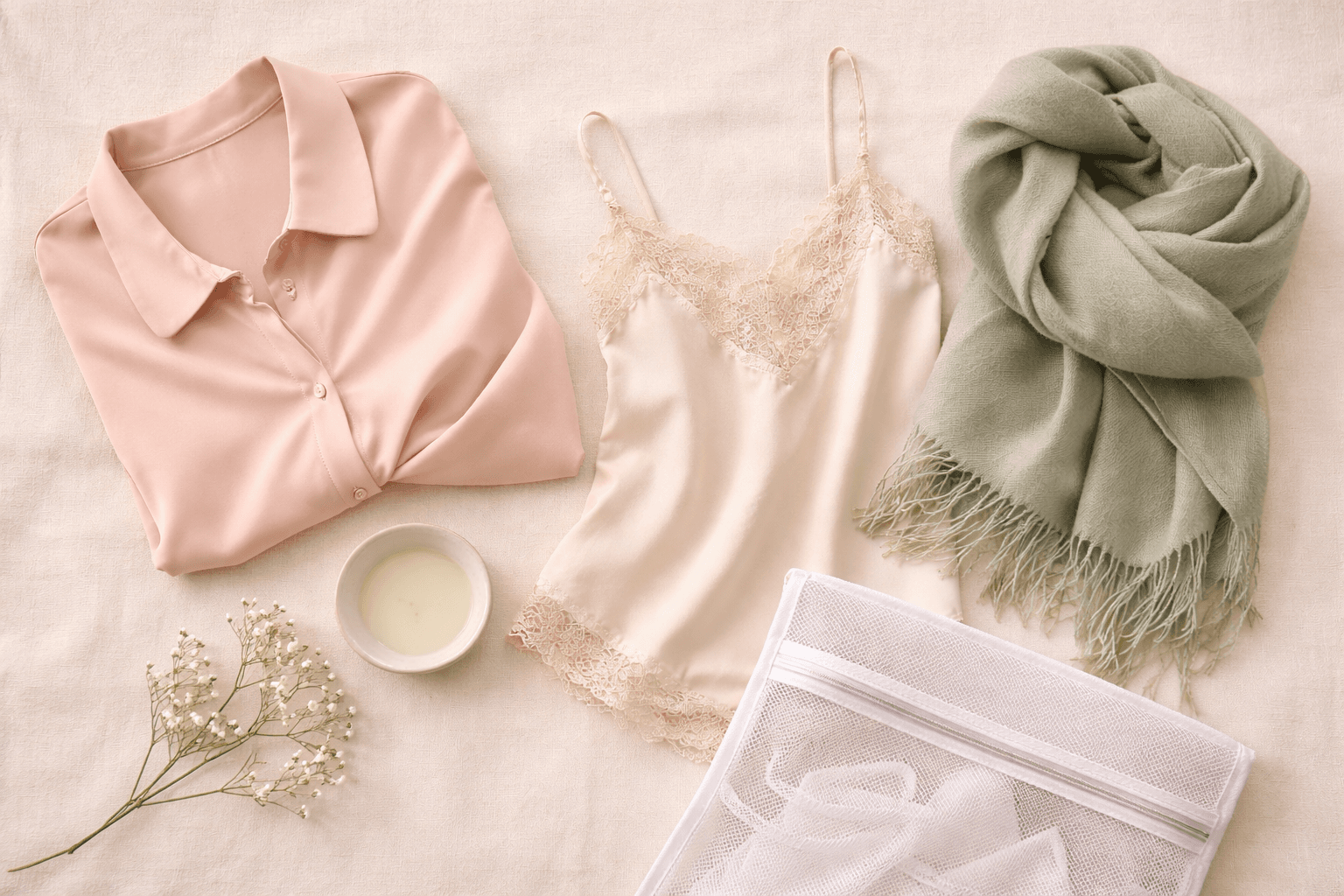
If the care label allows machine washing, always place the item inside a mesh laundry bag first. Use a gentle or delicate cycle with cold water and a mild detergent. The mesh bag prevents the lace from catching on other items or the drum of the machine. For heavily embellished items with beading or sequins, hand washing is the safer route.
Air dry lace items flat rather than hanging them. The weight of water can stretch delicate lace patterns out of shape. If you need to iron lace, place a clean cloth between the iron and the fabric, and use the lowest heat setting.
Linen: Tougher Than It Looks
Linen is one of the more forgiving delicate fabrics. It is actually machine washable and can handle warmer water temperatures than silk or wool. The main challenge with linen is that it wrinkles like nothing else on earth. If you have ever pulled a linen shirt out of the machine and thought it looked like a crushed paper bag, you are not alone.
Wash linen on a gentle cycle with cold or lukewarm water. Remove it from the machine promptly and shake it out. The best trick for linen is to iron it while it is still slightly damp. If it has dried completely, use a spray bottle to dampen it before ironing. A hot iron on damp linen will smooth out wrinkles beautifully and give you that crisp, relaxed look that linen is known for.
If ironing is not your thing, our ironing service handles linen regularly and we know exactly how to get it looking sharp without overdoing it.
Chiffon and Sheer Fabrics
Chiffon, organza and other sheer fabrics are lightweight and prone to snagging. They can be made from silk, polyester or a blend, so always check the care label because the fibre content determines the washing method.
For polyester chiffon, a gentle machine wash in a mesh bag is usually fine. For silk chiffon, hand wash only in cold water with a delicate detergent. Either way, never put chiffon in the dryer. The heat will cause puckering and can melt polyester-based sheers. Hang to dry or lay flat, and if you need to remove wrinkles, use a steamer rather than an iron. Direct contact with a hot iron can leave shiny marks or scorch the fabric.
Storage Tips for Delicate Garments
How you store delicates is just as important as how you wash them. Proper storage prevents moth damage, yellowing, stretching and creasing between wears.
General Storage Rules
- Always clean before storing. Stains and body oils attract moths and can set permanently over time. Even if a garment looks clean, give it a wash before putting it away for the season.
- Fold knitwear, never hang it. Hanging stretches the shoulders and neckline of wool, cashmere and knitted items. Fold them neatly and store flat.
- Use breathable garment bags for silk and lace items hanging in your wardrobe. Avoid plastic covers as they trap moisture and can cause yellowing.
- Add cedar blocks or lavender sachets to drawers and wardrobes. These are natural moth deterrents and much safer for fabrics than mothballs, which can leave a chemical smell.
- Keep delicates out of direct sunlight even in storage. UV light fades colours over time, particularly on silk and fine wool.
Seasonal Storage
When putting winter woolens or summer silks away for the season, wash them thoroughly, fold them with acid-free tissue paper between layers, and store in a clean cotton bag or a breathable container. Avoid airtight plastic bins as trapped moisture can cause mildew. Check on stored items every few months and refold to prevent permanent creases.
When DIY Is Risky and Professional Care Makes More Sense
Look, we are all for saving money and doing things yourself. But some garments genuinely deserve professional handling. If the item cost more than a hundred dollars, has sentimental value, or features construction details you do not understand, it is worth paying a few dollars to have it done right rather than risking a mistake that cannot be undone.
Our delicates and special care service is specifically designed for garments that need extra attention. We assess each piece individually, check the fibre content and construction, and clean it using the most appropriate method. This is particularly useful for:
- Wedding dresses and formal wear with beading or boning
- Vintage garments where the fabric may be weakened by age
- Heavily embellished items with sequins, embroidery or applique
- Multi-fabric garments where different sections need different treatment
- Anything labelled dry clean only that you are unsure about
We also offer a straightforward wash and fold service for your everyday items, which frees up your time to focus on hand washing the pieces that really need your personal attention. It is a good balance. Let us handle the sheets, towels and t-shirts while you take care of the silk blouse yourself, or hand that over to us too.
Plenty of our customers in the Beenleigh area drop off their regular washing with us and keep their delicates separate for special care. It works well for families who want to protect good garments without spending their entire weekend on laundry.
Quick Reference: Delicate Fabric Care Summary
- Silk: Hand wash cold, no wringing, roll in towel to dry, lay flat away from sunlight.
- Wool and cashmere: Cold water, wool detergent, reshape while damp, dry flat.
- Lace and embroidered: Mesh bag, gentle cycle, cold water, air dry flat.
- Linen: Machine washable, wrinkles easily, iron while still damp for best results.
- Chiffon and sheers: Check fibre content, hand wash silk versions, use a steamer instead of an iron.
Ready to Take the Stress Out of Laundry?
If all of this sounds like more effort than you have time for, we completely understand. Looking after delicate fabrics properly takes patience, and not everyone has a spare hour on a Sunday afternoon to hand wash silk. That is exactly why our delicates service exists. We treat every garment with the care it deserves, so you do not have to worry about shrinkage, colour loss or accidental damage. Get in touch with us today to get a quote and let Fresh Folds look after the fabrics that matter most to you.
Reference Stack
Sources and further reading
- ACCC Product Safety: Care Labelling for Clothing and Textile Products
Australian mandatory standard for care labelling, explaining the symbols and requirements manufacturers must follow.
- CSIRO: Australian National Fabric Care Institute
CSIRO textile science resources covering fabric properties, testing standards, and care recommendations for natural and synthetic fibres.
- Sustainability Victoria: Save Energy in the Laundry
Guidance on washing temperatures and practices that protect fabrics while reducing environmental impact.